Problem statement
Moderation and advertising tasks were fragmented across unclear workflows. Internal teams needed faster access to flagged content, review context, escalation paths, campaign setup details, and performance visibility.
Structuring moderation and campaign workflows for a teen-focused social platform.
A systems UX project for an internal moderation dashboard and ad management portal. The work focused on queue visibility, escalation context, campaign setup, approval states, and operational decision-making.
Overview
This project explored how internal teams could review flagged content, understand moderation context, manage campaigns, and track approval states from a centralized operational dashboard.
Moderation and advertising tasks were fragmented across unclear workflows. Internal teams needed faster access to flagged content, review context, escalation paths, campaign setup details, and performance visibility.
Audience
Platform moderation admins, digital ad managers, and ad platform success managers responsible for content review, campaign management, and advertiser support workflows.
Interaction focus
Moderation systems, campaign workflows, status visibility, and decision-support patterns for dense operational tools.
Case study role
Shows systems-focused UX work involving dashboard design, moderation workflows, information hierarchy, and operational tooling.
Honesty note
Conceptual academic project based on UX research, workshops, and prototype exploration. Business metrics and implementation outcomes are outside this project scope.
Process
The process used workflow analysis, journey mapping, dashboard hierarchy, and prototype iteration to organize high-priority moderation and campaign management tasks.
Identified high-friction moderation tasks
Mapped the areas with the highest operational complexity: flagged content review, user reports, escalation paths, and moderation status visibility.
Outcome: Prioritized workflows that affected review speed, context gathering, and escalation decisions.
Restructured dashboard information hierarchy
Grouped analytics, alerts, queues, reports, campaign status, and performance data by task priority.
Outcome: Made urgent actions easier to identify in a dense dashboard environment.
Simplified campaign management flows
Redesigned campaign setup into a step-by-step flow for targeting, scheduling, approvals, and analytics review.
Outcome: Clarified campaign state, next action, and performance context for ad managers.
Created consistent system structures
Designed reusable dashboard layouts, moderation patterns, status modules, and analytics components.
Outcome: Created a consistent structure across moderation and advertising workflows.
Improved clarity through contextual guidance
Added clearer review context, campaign states, status labels, and guidance near decision points.
Outcome: Helped moderators and ad managers understand what changed, what needed review, and what action came next.
Key decisions
The main design decisions focused on high-risk moderation, campaign workflow visibility, dashboard scanability, and reusable structures for operational tools.
Prioritized high-risk moderation actions
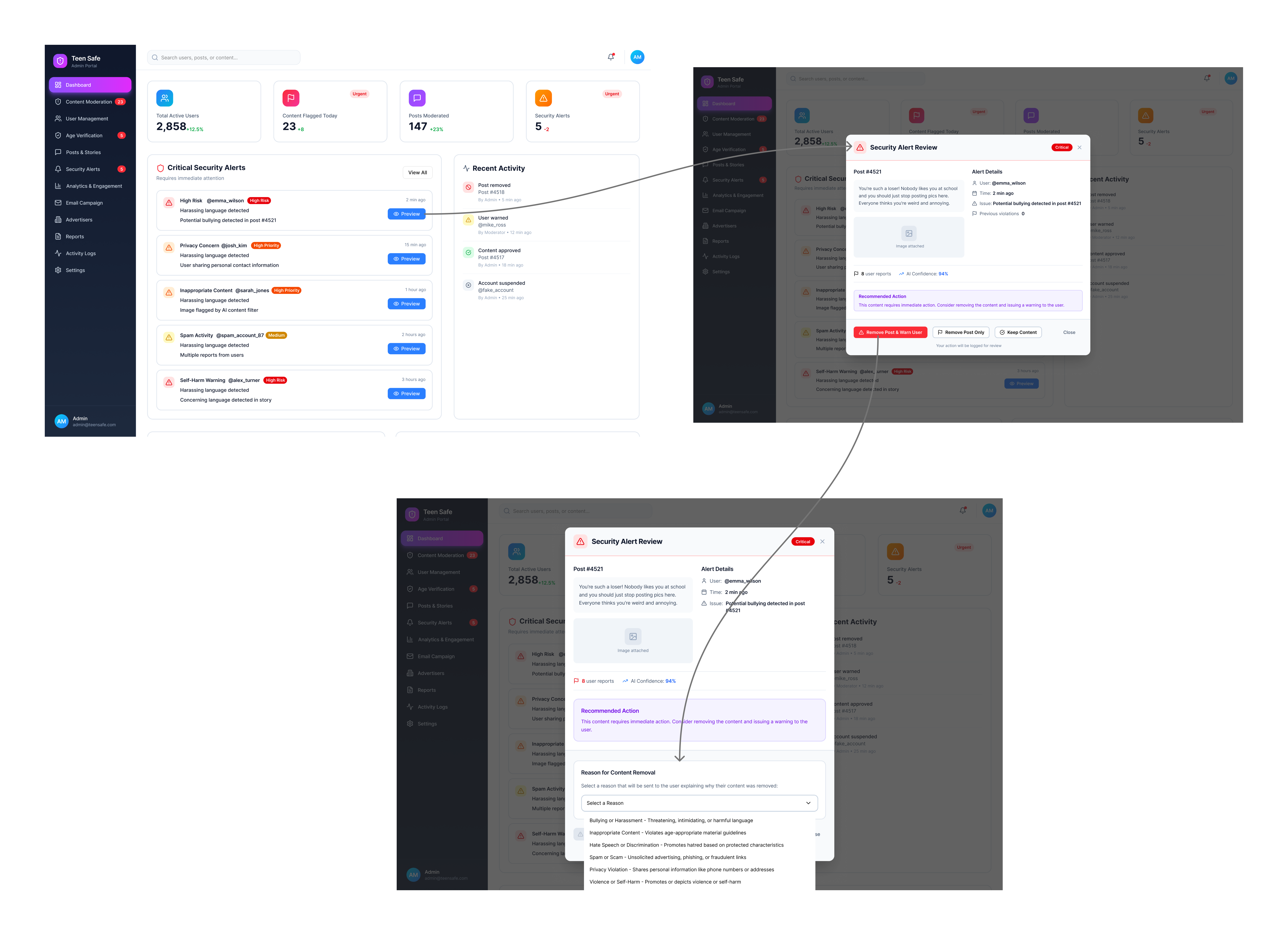
Critical alerts, flagged content, and AI-supported review indicators were surfaced earlier in dashboard layouts.
Impact: Helped moderators identify urgent cases and review supporting context faster.
Reduced cognitive load across dashboards
Operational tasks were separated into clearer groups for queues, analytics, reports, campaigns, and approvals.
Impact: Improved scanability during high-volume dashboard review.
Improved campaign workflow transparency
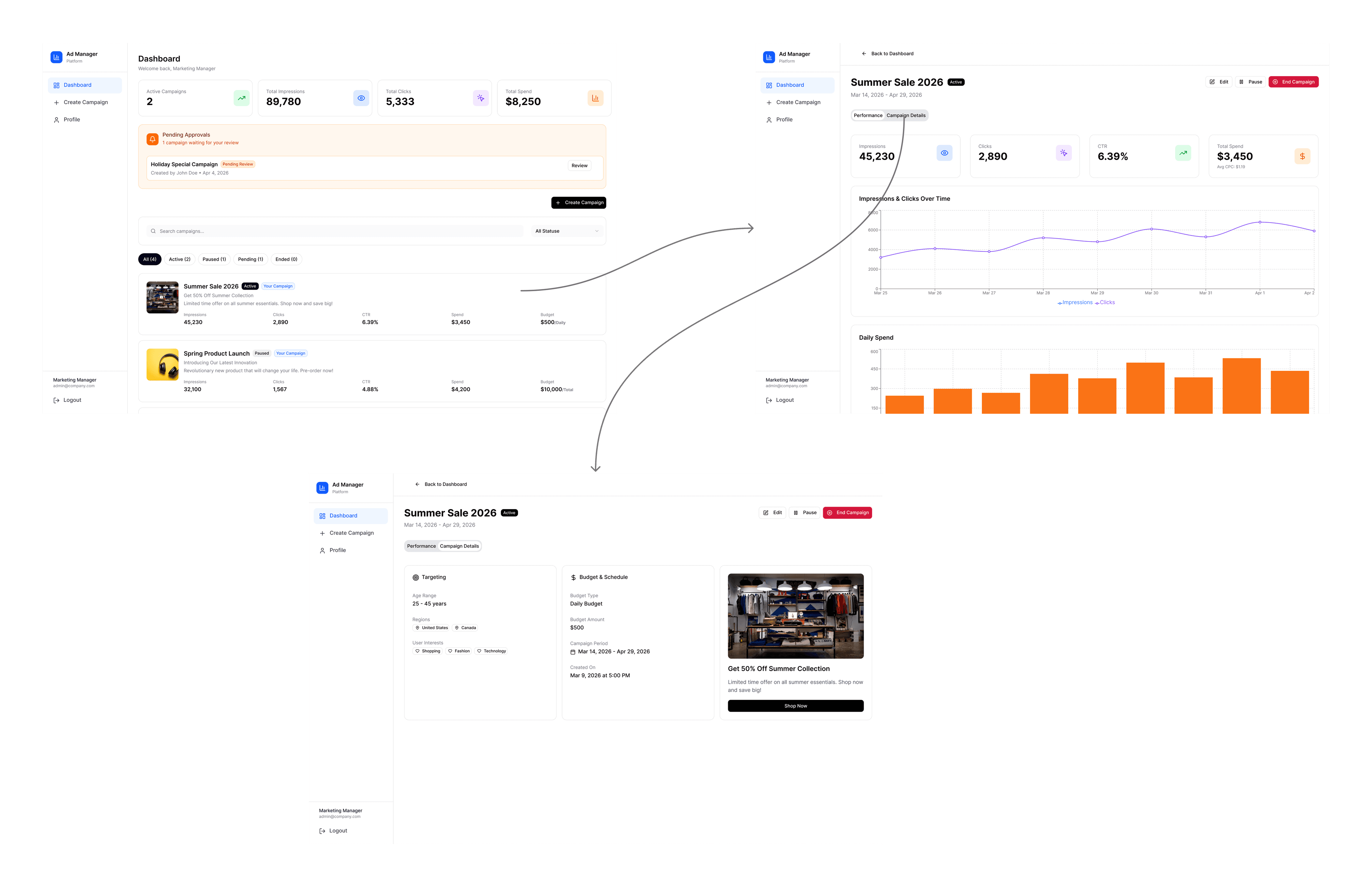
Campaign approvals, targeting configurations, scheduling, and performance tracking became visible throughout the flow.
Impact: Helped ad managers understand campaign state and next action.
Created consistent system patterns
Reusable layouts, navigation structures, analytics modules, and moderation components were introduced across screens.
Impact: Supported consistency across related operational workflows.
Balanced safety with platform operations
The system connected safety review, advertiser workflows, and platform governance needs in one operational model.
Impact: Made the dashboard useful for moderation decisions and campaign operations.
Screen designs
Outcome
The redesign shows how internal dashboard structure can support faster review, clearer status visibility, and more predictable campaign management.
Improved moderation visibility
Moderators could access flagged content, alerts, reports, and user activity from a centralized review surface.
Reduced friction during campaign management
The advertising workflow clarified campaign setup, targeting, scheduling, approval state, and performance review.
Created a more consistent dashboard experience
Dashboard screens followed shared interaction, layout, and status patterns.
Improved transparency through clearer system feedback
Moderation states, campaign approvals, analytics, and status indicators made workflows easier to track.
Reflection
Next, I would test the dashboard with people familiar with moderation, trust-and-safety review, and ad operations to evaluate review speed, decision confidence, and dashboard scanability.
I would also explore:
Contact
I would love to hear from you whether it is about design or new opportunities. Always excited to connect and share ideas.
